Reception
Eligibility and co-payment at the counter, not after the visit.
Insurance is where clinic admin goes to die: a price list per company, an approval per procedure, a claim per visit and a reconciliation nobody enjoys. All of it belongs inside the visit rather than beside it.
Every insurer pays differently for the same service. Hold their tariff once and the correct covered amount appears on the invoice without anyone looking it up.
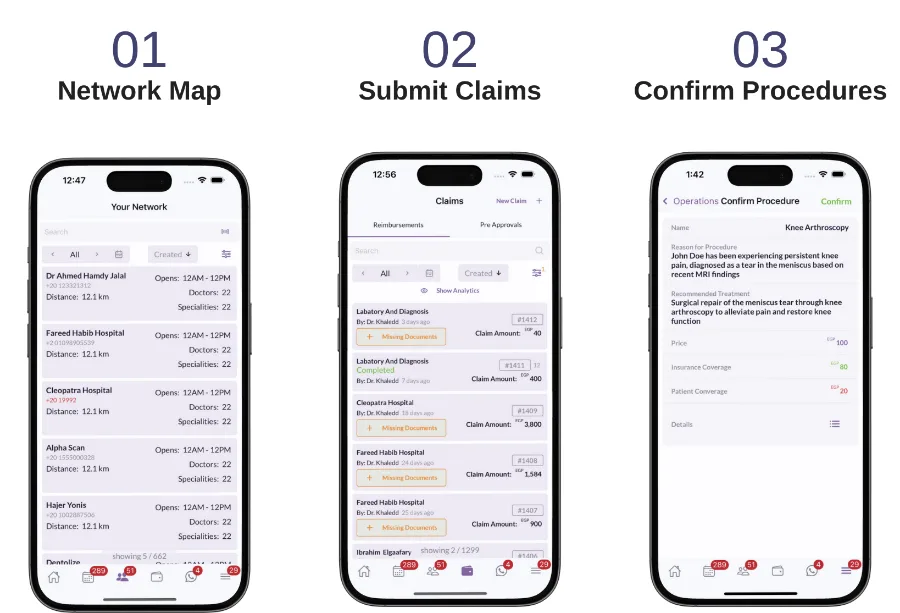
Checking cover after the patient has left is how a clinic ends up absorbing the cost. Eligibility and pre-authorisation sit in the visit, before the service.
A submitted claim is not revenue. Claims carry a state — submitted, approved, partially paid, rejected, resubmitted — and the reconciliation is against what the insurer actually paid.
It is rarely one person, which is why it gets lost between them.
Eligibility and co-payment at the counter, not after the visit.
A worklist of approvals, submissions and rejections rather than a pile.
What each company owes, how long they take, and what they reject.
The work does not disappear. It stops being done twice.
Runs in your browser, no sign-up, and nothing about your patients leaves it.
No sign-up and no form: the file downloads directly.
Yes. Eligibility, pre-authorisation and claims run through NPHIES where the clinic is enrolled, with the responses stored against the visit.
Yes. Each company, and each plan within a company, can have its own tariff, and the correct one is applied automatically from the patient’s policy.
The shortfall is recorded per line, so the reason is visible rather than appearing as an unexplained gap in the month’s income.
Yes, where the policy records them. The point is to find out before the patient is in the chair rather than after.
Yes. Outstanding is aged by company, which is usually the first thing an owner wants from insurance reporting.
Invoices that build themselves from what was delivered, with packages, insurance share and expenses in one ledger.…
Read moreOne medical record per patient: history, diagnoses, prescriptions, images and every visit in order. Medicolize keeps…
Read moreRevenue, cost and profit per branch, department and doctor, updating as the day runs. Medicolize shows clinic owners…
Read moreHalf an hour on your own services, packages and price list. Someone calls you back within a day.